New Look. Same Trusted Taste.
Free shipping on ORDERS OVER $44

Why Am I Suddenly Reacting to Gluten After Moving to North America?
You ate roti your whole life. So why now?
Aarog Foods
5/29/20266 min read
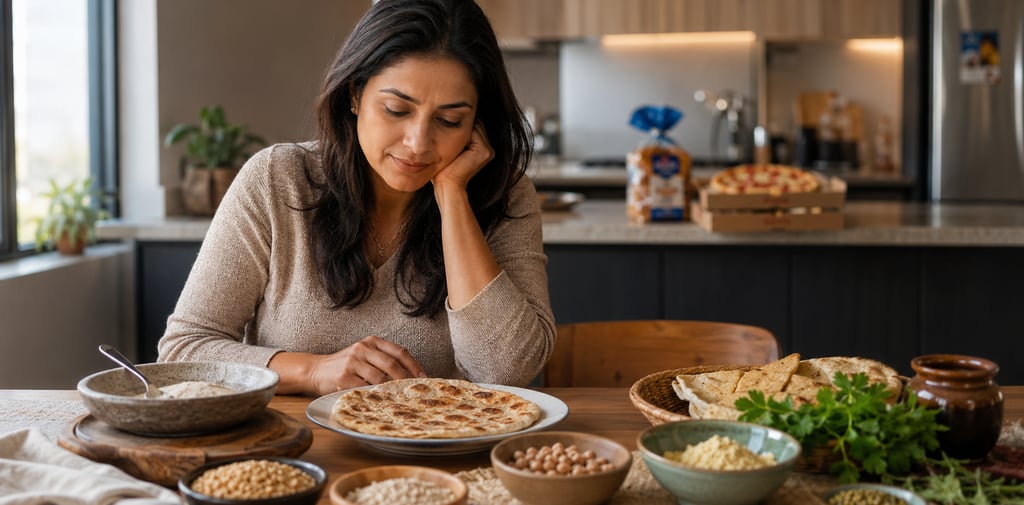
For many South Asian families, wheat is not just food.
It is roti with sabzi. Paratha on weekends. Poori at family gatherings. Naan with chole. A warm phulka straight from the tawa.
So when someone moves to Canada or the U.S. and suddenly starts feeling bloated, heavy, tired, itchy, uncomfortable, or “not right” after eating wheat, the first reaction is usually confusion.
“I’ve eaten atta my whole life. How can gluten be a problem now?”
It’s a fair question.
The answer is not always simple, and it does not mean every South Asian person is allergic to gluten. But it does mean our bodies, food systems, stress levels, gut health, and daily routines can change after migration — and sometimes those changes make old foods feel different in a new environment.
Let’s break it down in a simple, honest way.
First, gluten allergy is not the same thing as gluten sensitivity or celiac disease
People often use the word “gluten allergy” casually, but medically there are a few different things people may be dealing with.
1. Celiac disease
This is an autoimmune condition. When someone with celiac disease eats gluten, the immune system reacts and can damage the small intestine.
2. Wheat allergy
This is an allergic reaction to wheat proteins. It is different from celiac disease.
3. Non-celiac gluten sensitivity
Some people test negative for celiac disease and wheat allergy, but still feel symptoms after eating gluten-containing foods.
4. General digestion issues
Sometimes the issue may not be gluten itself. It could be the quantity of wheat, low fibre variety, processed foods, stress, gut imbalance, or overall diet changes.
This is why proper testing matters. But it is also why many families start looking for wheat-free or gluten-free options when their body keeps giving signals.
“But I ate wheat all my life back home”
Yes — and that is exactly why this topic matters.
Many South Asian people grew up eating wheat daily in India, Pakistan, Bangladesh, Nepal, Sri Lanka, or other parts of South Asia. For years, there may have been no obvious issue.
But the body is not frozen in time.
Health can change with age. Gut health can change. Stress can change. Sleep can change. Food quality can change. Activity level can change. Even the way wheat is eaten can change.
Back home, wheat may have been part of a full meal: roti, dal, sabzi, dahi, achar, salad, chaas, walking, household movement, and a different daily rhythm.
In North America, wheat often shows up differently: bread, pizza, pasta, wraps, bakery items, frozen foods, restaurant meals, snacks, and larger portions. Add stress, sitting, long work hours, less sunlight, colder weather, and a rushed lifestyle — and the same body may respond differently.
It may not be “sudden.” It may be something that slowly builds up until the body finally starts making noise.
Migration changes more than your address
When families move countries, food is one of the first things that changes — even when we think we are eating the same food.
The atta may be different.
The wheat variety may be different.
The processing may be different.
The rest of the diet may be different.
The daily movement may be different.
The stress level may be completely different.
A person who ate two fresh rotis with dal and sabzi back home may now be eating toast in the morning, pizza at work, cookies with tea, restaurant naan at dinner, and packaged snacks in between.
That is a very different wheat load.
Sometimes people blame one roti, but the real issue may be the total wheat and processed-food exposure throughout the day.
Stress can affect digestion more than people realize
Many immigrants carry a lot quietly.
New country. New job. Mortgage pressure. Family responsibilities. Long shifts. Less rest. Weather changes. Social isolation. Financial stress.
The gut and the brain are closely connected. When stress is high, digestion can become more sensitive. Bloating, constipation, acidity, cramps, heaviness, and food reactions may become more noticeable.
This does not mean symptoms are “just stress.” It means stress can make the body less tolerant of foods it previously handled better.
For some people, a major life change, illness, pregnancy, infection, surgery, or long-term stress may also be around the same time symptoms begin.
Wheat in South Asian cooking vs wheat in North American eating
Traditional South Asian wheat eating is usually centred around fresh rotis or parathas made at home.
North American wheat eating can be very different.
Think about a typical week:
Bread
Bagels
Pizza
Pasta
Burgers
Wraps
Muffins
Cookies
Crackers
Frozen meals
Restaurant gravies thickened with flour
Snacks with hidden wheat ingredients
Even if someone says, “I only eat two rotis,” they may still be getting wheat from many other foods.
This is where people start feeling that wheat is “not suiting them anymore.”
Sometimes it is gluten. Sometimes it is wheat. Sometimes it is the overall processed-food pattern.
Either way, the body is asking for a reset.
Age also matters
Many people discover gluten-related issues later in life.
That surprises people because they assume food intolerances or celiac disease must start in childhood. But symptoms can show up in adults too.
A person may live for years without clear signs, then slowly start noticing bloating, fatigue, skin issues, anemia, constipation, diarrhea, brain fog, joint pain, or discomfort after wheat-heavy meals.
This is why it is important not to dismiss symptoms just because “we have always eaten this.”
Your past diet does not cancel your present symptoms.
Could South Asians be under-diagnosed?
In many South Asian families, digestive discomfort is normalized.
Bloating? Have ajwain.
Acidity? Drink chai.
Constipation? Take something at night.
Stomach pain? Must be spicy food.
Fatigue? You are working too much.
Many people do not get tested unless symptoms become severe. Some may never connect their symptoms to wheat or gluten.
There is also a cultural gap. Gluten-free eating is often seen as a Western trend, not something that applies to roti-eating households.
But gluten-related conditions are not limited to one culture. South Asian people can have them too.
The challenge is that most gluten-free products in the market were not made for our food.
They were made for toast, cakes, muffins, and cookies — not soft rotis, parathas, wraps, chillas, and everyday Indian cooking.
That is where the real frustration begins.
The hardest part is not giving up wheat. It is giving up familiar food.
For South Asian families, the emotional part is huge.
People are not just looking for “gluten-free flour.”
They are looking for something that lets them eat normal food again.
They want:
Soft roti.
Paratha that bends.
Dough that rolls.
Food that feels familiar.
Meals the whole family can share.
No separate plate.
No feeling left out.
That is exactly why Aarog exists.
Not to make gluten-free eating feel like a diet.
Not to make people feel restricted.
But to bring familiar South Asian meals back into everyday life — without wheat.
A better way to look at it
Instead of asking, “Why did gluten suddenly become a problem?” maybe the better question is:
“What changed around my body, my food, and my lifestyle?”
For many people, the answer may be a mix of things:
More processed wheat
Less movement
More stress
Different wheat products
Gut health changes
Age-related changes
Family history
Undiagnosed celiac disease or gluten sensitivity
Larger portions and hidden wheat exposure
The solution is not panic. The solution is awareness.
Listen to your body. Speak to your healthcare provider. Get tested if symptoms are ongoing. And if wheat is not working for you anymore, know that you still have options.
You do not have to leave roti behind
A gluten-free lifestyle should not mean giving up South Asian food.
At Aarog Foods, our products are made for real kitchens — the kind where rotis, parathas, chillas, wraps, sabzi, dal, achar, and family meals still matter.
DailyLift is our gluten-free multi-grain flour blend designed as an atta replacement for soft rotis, parathas, wraps, and everyday cooking.
Our lentil-based chilla mixes are made for simple, protein-rich meals that fit into busy family routines.
Because better eating should still feel like home.
When should you speak to a doctor?
If you regularly feel symptoms after eating wheat or gluten, consider speaking to a healthcare professional before fully removing gluten from your diet, especially if you want to test for celiac disease.
Common signs people discuss with their doctor include:
Ongoing bloating
Constipation or diarrhea
Stomach pain
Unexplained fatigue
Low iron or anemia
Skin rashes
Brain fog
Weight changes
Family history of celiac disease
Symptoms that improve when avoiding wheat or gluten
Testing is important because celiac disease is a medical condition and should not be guessed.
Final thought
If wheat does not feel the same in your body anymore, you are not alone.
Many South Asian families in North America are quietly asking the same question:
“How did I eat roti my whole life, and now I can’t?”
The answer may be medical. It may be lifestyle-related. It may be gut-related. It may be a combination.
But one thing is clear: you deserve food that supports your body without disconnecting you from your culture.
That is the future of everyday South Asian food — familiar, thoughtful, and made for the way we live now.
FAQs
Can gluten issues start later in life?
Yes. Some people develop symptoms later in life, even if they ate wheat for many years without obvious problems.
Is gluten allergy the same as celiac disease?
No. Celiac disease is autoimmune. Wheat allergy is an allergic reaction. Gluten sensitivity is different from both.
Should I stop eating gluten before testing?
If you are planning to test for celiac disease, speak with your healthcare provider first. Stopping gluten before testing may affect results.
Is DailyLift gluten-free atta?
DailyLift is a wheat-free, gluten-free multi-grain flour blend designed for rotis, parathas, wraps, and everyday South Asian cooking.
Is gluten-free food only for people with celiac disease?
No. Some people choose gluten-free foods because of gluten sensitivity, wheat intolerance, digestive comfort, or personal preference. But anyone with ongoing symptoms should seek medical advice.
Can I still eat South Asian food without wheat?
Yes. With the right flour blends and recipes, many familiar foods like rotis, parathas, chillas, wraps, and savoury pancakes can still be part of everyday meals.
Questions? Reach out anytime.
Subscribe
© 2026. All rights reserved.
Returns & Refunds
Aarog Foods Inc.
120 12827 76 Ave Surrey BC V3W 1E6
P: +1(877) 383-5994
E: support@aarogfoods.com
Hours: Mon-Fri 9-5pm
Ships from Canada