New Look. Same Trusted Taste.
Free shipping on ORDERS OVER $44

Nutrition Concerns for Celiac and Gluten-Intolerant People — and How Aarog DailyLift Helps
People with celiac disease or gluten intolerance often struggle with gluten-free foods that are low in fibre, protein, and everyday nutrition. Learn how Aarog DailyLift offers a better gluten-free atta option for rotis, parathas, and South Asian cooking.
Aarog Foods
5/1/20265 min read
Nutrition Concerns for Celiac and Gluten-Intolerant People — and How Aarog DailyLift Helps
For people with celiac disease or gluten intolerance, avoiding gluten is not a trend. It is a daily necessity.
But here is the part many people do not talk about enough: going gluten-free does not automatically mean eating healthier.
In fact, many gluten-free products are made mostly with refined starches and simple flours. They may remove wheat, but they often do not replace the fibre, protein, minerals, and everyday nourishment that people were getting from traditional grain-based foods.
For South Asian families, this challenge is even bigger.
Roti, paratha, and atta-based meals are part of daily life. So when wheat has to be removed, people are not just looking for a “gluten-free flour.” They need a better everyday atta replacement.
That is why Aarog DailyLift was created.
Why nutrition matters more for celiac and gluten-intolerant people
People with celiac disease must follow a strict gluten-free diet. Health Canada explains that gluten-free foods prepared under good manufacturing practices and not exceeding 20 ppm of gluten from cross-contamination meet the health and safety intent of Canadian gluten-free regulations.
But removing gluten is only one part of the problem.
The Canadian Celiac Association notes that people with celiac disease are at higher risk for nutrient deficiencies, especially before diagnosis or during early recovery, because intestinal damage can affect nutrient absorption.
The Celiac Disease Foundation also lists common nutrient concerns for people with celiac disease, including fibre, iron, calcium, magnesium, zinc, folate, niacin, riboflavin, vitamin B12, vitamin D, calories, and protein.
So the goal should not be only:
“Is this gluten-free?”
The better question is:
“Is this gluten-free food also nourishing enough for everyday eating?”
The common problem with many gluten-free foods
Many gluten-free breads, flours, and packaged products rely heavily on refined starches. These can help with texture, but they do not always support a balanced diet.
The Canadian Celiac Association has specifically noted that in Canada, many gluten-free breads and flours are low in fibre and are not enriched with iron and B vitamins.
That matters because wheat-based foods are often a regular source of fibre and other nutrients in many diets. When wheat is removed, those nutrients need to come from somewhere else.
For South Asian households, this issue shows up directly at the dinner table.
If the gluten-free atta is mostly starch, the roti may:
feel less satisfying
lack fibre
lack structure
taste flat
turn stiff or dry
fail as an everyday replacement
That is why ingredient structure matters.
Gluten-free does not mean grain-free
One mistake people often make is thinking gluten-free means avoiding all grains.
That is not true.
Many grains and seeds are naturally gluten-free, including rice, sorghum, millet, ragi, corn, flaxseed, and certified gluten-free oats. The issue is not grains in general. The issue is gluten-containing grains such as wheat, barley, rye, and related sources.
A smart gluten-free diet should include a variety of safe, nourishing foods.
McMaster’s Celiac Disease Clinic suggests diversifying gluten-free grains and notes that naturally gluten-free grains can help add nutrients such as fibre, magnesium, and iron.
This is exactly where Aarog DailyLift takes a different approach.
How Aarog DailyLift is different
Aarog DailyLift is not built like a basic gluten-free baking flour.
It is a multi-grain gluten-free atta replacement designed for South Asian kitchens — especially rotis, parathas, wraps, and everyday flatbreads.
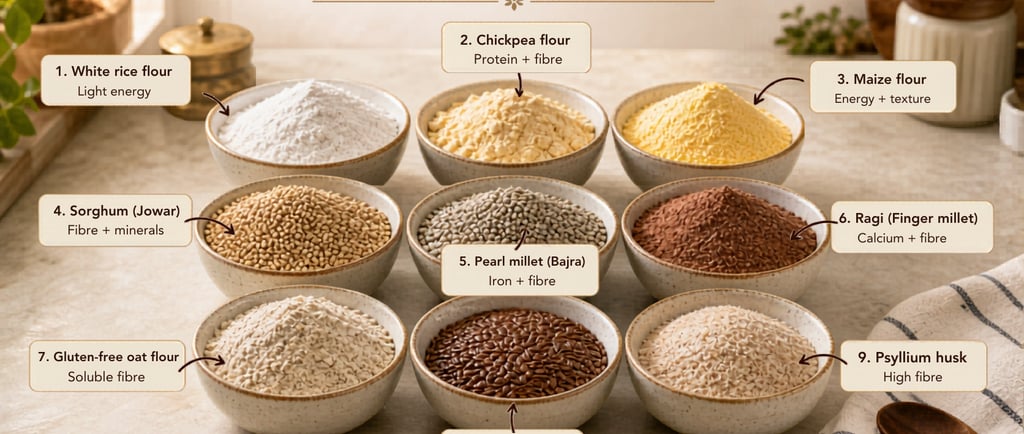
DailyLift includes a balanced blend of naturally gluten-free ingredients such as:
white rice flour
chickpea flour
maize flour
sorghum
pearl millet
ragi
gluten-free oat flour
flaxseed
psyllium husk
Each ingredient has a purpose.
Fibre support for everyday meals
Fibre is one of the biggest concerns in gluten-free eating. Many gluten-free products are low in fibre, especially when they rely on refined starches.
DailyLift is designed with fibre-supporting ingredients like flaxseed, psyllium husk, millets, chickpea flour, and gluten-free oat flour.
This matters because roti is not an occasional treat in South Asian homes. It is often eaten daily. So the flour used for rotis should support daily nutrition, not just avoid gluten.
Protein from pulses and grains
Many gluten-free flour blends are starch-heavy. That can make the product lighter, but it may not feel satisfying as part of a meal.
DailyLift uses chickpea flour along with grains and seeds to create a more balanced atta replacement. Chickpea flour helps add body, structure, and plant-based protein to the blend.
That is important for people who want their rotis to feel more filling and meal-worthy.
Millets for traditional grain nutrition and flavour
Millets such as bajra and ragi have been used in South Asian cooking for generations.
They bring a more earthy, traditional flavour and a deeper grain profile compared with plain starch-based gluten-free flours.
For many families, this makes DailyLift feel less like a substitute and more like a real everyday flour.
Psyllium and flaxseed for better texture
Nutrition is important, but texture matters too.
If gluten-free roti breaks, cracks, or becomes stiff, people will not use it daily.
DailyLift includes psyllium husk and flaxseed to support binding and flexibility. These ingredients help the dough hold together better, which is especially important when gluten is removed.
This is what makes DailyLift practical: it focuses on both nutrition and usability.
Made for South Asian cooking, not just baking
A lot of gluten-free flour is made for cakes, cookies, muffins, and pancakes.
But roti is different.
Roti needs dough strength, moisture, flexibility, and the ability to cook on a hot tawa. It usually does not rely on eggs, sugar, butter, yeast, or baking methods to create texture.
That is why a regular gluten-free baking flour often does not work well for rotis.
DailyLift was designed around real South Asian cooking habits:
rolling dough
cooking on a tawa
making rotis and parathas
eating with sabji and daal
using flour as part of daily meals
That difference matters.
Important note for celiac customers
If you have celiac disease, you should always read labels carefully and choose products that meet your personal medical needs.
In Canada, a gluten-free claim is a regulated claim. The CFIA states that “low gluten” or “reduced gluten” claims are not acceptable because they may mislead people with celiac disease, who are medically advised to follow a gluten-free diet.
At Aarog, we believe gluten-free customers deserve clear information, careful ingredient selection, and products built with trust in mind.
DailyLift is made with naturally gluten-free ingredients and designed for people looking for a wheat-free atta replacement for everyday South Asian cooking.
Why DailyLift solves a real problem
For many celiac and gluten-intolerant people, the problem is not only finding gluten-free food.
The real problem is finding gluten-free food that fits their actual life.
For South Asian families, that means:
rotis that feel familiar
flour that is not only starch
ingredients with fibre and plant-based nutrition
better taste from multi-grain structure
better handling for dough and rolling
a Canadian-made option for everyday cooking
Aarog DailyLift was created to fill that gap.
Final thought
People with celiac disease and gluten intolerance deserve more than bland, starch-heavy substitutes.
They deserve gluten-free foods that are practical, nourishing, and made for the meals they actually eat.
For South Asian kitchens, that means a better gluten-free atta replacement.
Aarog DailyLift is made for rotis, parathas, and everyday wheat-free cooking — with a multi-grain structure designed to support both taste and nutrition.
Questions? Reach out anytime.
Subscribe
© 2026. All rights reserved.
Returns & Refunds
Aarog Foods Inc.
120 12827 76 Ave Surrey BC V3W 1E6
P: +1(877) 383-5994
E: support@aarogfoods.com
Hours: Mon-Fri 9-5pm
Ships from Canada